
Your brain is not a hard drive
You don't drop tasks because you can't do them — you drop them because you forget you ever started. Here's why your brain needs an external memory, not more willpower.
The Paffie Team
June 24, 2026
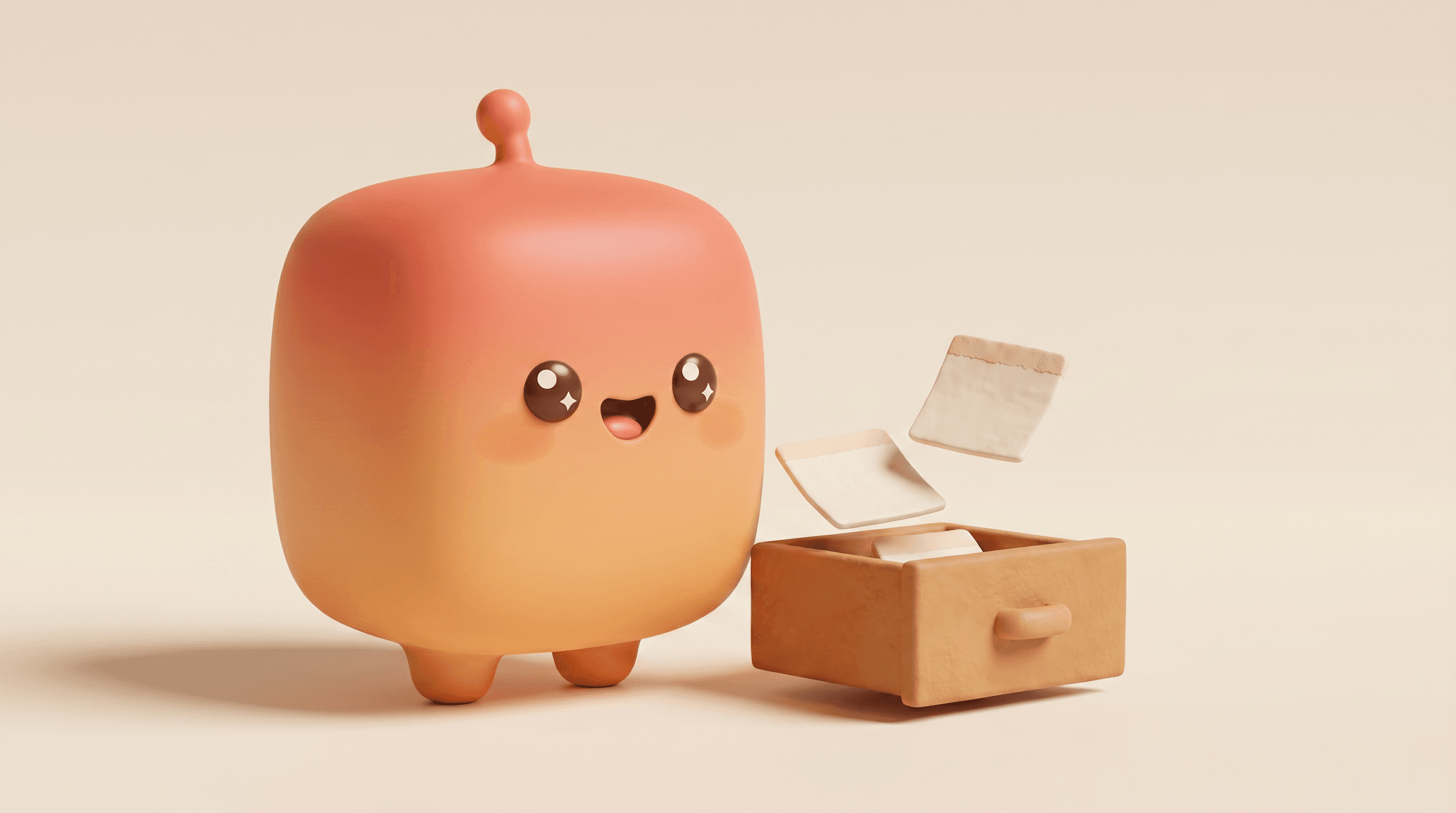
There's a book on your table. Bookmark stuck on page 20, right where it's been for three weeks. You were into it. Then one day a magazine landed on top of it, and the book quietly ceased to exist. Same story with the project you were thrilled about last month — now a folder you haven't opened. The friend you meant to text back. The vitamin you bought specifically so you'd take it daily, currently fossilizing in a drawer. You didn't decide to abandon any of it. It just… slid out of view, and your brain filed it under "gone."
Here's the thing nobody told you: you're not flaky, and you don't lack follow-through. You have a memory system that runs "out of sight, out of mind" on hard mode.
What's actually going on
The community shorthand for this is losing "object permanence" — like a baby who thinks the toy vanishes the second you hide it behind your hand. That's not quite the technical truth (you nailed real object permanence as a toddler), but it captures the feeling exactly. What's really happening is closer to working memory and object constancy: if a task, an object, or a person isn't in front of you, your brain struggles to keep holding the fact that it still exists, still matters, still belongs to you.
So the book didn't fail. You didn't decide it was unimportant. It's that "this exists and I committed to it" is a piece of information your working memory dropped the moment the book left your line of sight.
Which means the real problem is sneakier than it looks. You don't fail tasks because you can't do them. You fail them because you forget you ever committed to them. The doing was never the issue. The remembering was.
Your brain is not a hard drive
You've probably been treating your memory like storage — note it mentally, trust it'll be there when you need it. But an ADHD brain isn't a hard drive. It's more like RAM with a lot going on at once: brilliant at holding whatever's live and loud right now, genuinely bad at keeping the quiet, out-of-sight stuff indexed for later.
The fix isn't to try harder to remember. You can't will more storage into existence. The fix is to stop using your brain as storage at all — and build an external memory that does the remembering for you.
Some people call a good capture system a "neuroprosthesis": a tool that quietly does the job your executive function struggles with, the way glasses do the job your eyes can't. There's no shame in it. You'd wear the glasses.
A real external memory hands you three things your head can't reliably hold:
- Memory — it remembers, so your brain stops ambushing you at red lights with "did you ever email the landlord?"
- Order — you drag things into the sequence you'll actually do them, instead of everything screaming now at once.
- Hierarchy — you break the big scary blob ("do taxes") into a step small enough to start ("find last year's return").
The one habit that replaces all the others
Here's the part that quietly changes everything. When your reminders all live in one place you actually check, a single recurring capture turns many habits into one.
Think about it. You don't have to remember to floss, water the plant, take the vitamin, make the bed, and text your sister back. Trying to hold five separate habits in your head is five separate chances to forget — and on a foggy day, you'll miss most of them. Instead, you build exactly one habit: check the list. The list remembers the other five.
That's the whole trick, and it's a good one. Stop white-knuckling twenty fragile habits. Maintain one sturdy one.
How to build your external brain
- 1Get it all out of your head
Do a brain dump. Every task, worry, half-idea, and 'I should really…' — empty the tabs onto the page. Don't sort or judge yet. The point is to stop paying rent on things your brain was never built to store.
- 2Put it where you'll actually see it
The best system is the one in your line of sight. A perfect list buried in an app you never open is just a doom pile with extra steps. Visible beats tidy.
- 3Let recurring stuff recur
Anything you do on repeat — meds, bills, the weekly report — becomes an entry that comes back on its own. Now it lives in the list, not in your head, and not in a wave of 2am panic.
- 4Keep active projects in view
Out of sight is out of mind, so keep the things in progress somewhere you can't help but notice them. A project you can see is a project you won't quietly abandon on page 20.
Not sure what belongs in there? Pretty much everything that's currently haunting you:
- The tasks you keep half-remembering at 2am and forgetting by breakfast
- The projects you started and lost the second the tab closed
- The recurring stuff: meds, bills, birthdays, the poor plant
- The tiny admin you've been 'meaning to' do for a month
- The good ideas you will absolutely forget by lunch
The goal here isn't to become a color-coding productivity wizard. It's to stop paying the ADHD tax — the late fees, the duplicate buys, the second copy of the book you forgot you already owned. An external memory isn't about doing more. It's about stopping the quiet leak.
Watch the classic trap: spending three hours building a gorgeous, elaborate system you'll abandon by Thursday. The system doesn't have to be clever. It has to be one you'll actually open tomorrow. Simple and visible wins every time.
Where Paffie fits
This is exactly what Paffie's brain dump is for. When a task, an idea, or a nagging worry is rattling around your skull, you capture it in a few seconds — by voice or by text — and let it out of your head and into something that remembers for you. The noise stops haunting you and starts being a thing you can see, sort, and finally finish. Your brain gets to do what it's genuinely good at: thinking, connecting, creating. The list handles the boring, load-bearing job of not forgetting.
Paffie is free to start.
Match your energy, capture the noise, and do the next right thing — in about a minute a day.
This is a systems idea with a little neuroscience attached, not medical advice. ADHD care — including whether medication is right for you — is a conversation for you and a qualified professional.

Bring this into your day
Paffie turns ideas like these into a gentle daily rhythm that works with your energy.